
How to clean a shower enclosure properly – keep the glass clear and limescale-free for longer
Regular care prevents limescale, soap residue and water spots from building up on shower glass, profiles and seals. A short routine after showering is usually more effective than aggressive cleaning later.
Why limescale forms
Tap water contains dissolved minerals. When water droplets dry on the glass, calcium and magnesium residues remain and can form visible white deposits. The harder the water, the faster these marks appear.
Best routine after every shower
- Rinse soap and shampoo residue from the glass with clear water.
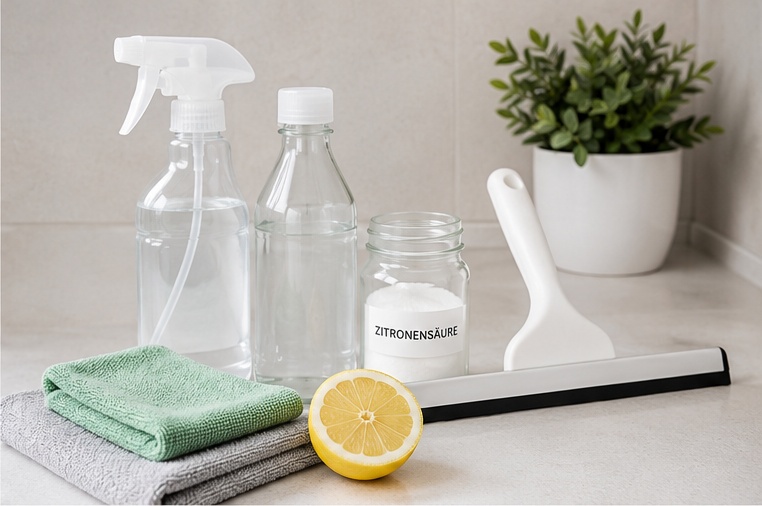
- Use a shower squeegee from top to bottom.
- Wipe profiles, handles and seals with a soft cloth.
- Ventilate the bathroom well so remaining moisture can dry quickly.
Suitable cleaning products
- Use mild bathroom or glass cleaners that are suitable for the surface.
- For light limescale, diluted vinegar or citric-acid solution can be effective on compatible glass surfaces.
- A small amount of washing-up liquid in warm water is suitable for regular grease and soap residue.
- Always rinse thoroughly with clean water and dry the glass afterwards.
Important surface precautions
- Do not use abrasive powders, scouring pads, steel wool or sharp tools.
- Avoid highly aggressive acids, alkalis and chlorine-based cleaners unless the manufacturer explicitly permits them.
- Never leave cleaning products on seals, profiles or coated surfaces longer than recommended.
- Natural stone and sensitive metal finishes require cleaners specifically approved for those materials.
Nano-coated glass
A nano coating reduces the adhesion of water and dirt, but it does not make the glass maintenance-free. Clean coated glass gently, avoid abrasive products and refresh the protective treatment when the water-repellent effect noticeably decreases.
Profiles and seals
Clean aluminium or stainless-steel profiles with a soft cloth and mild cleaner. Rinse soap residue from seals regularly and check that no deposits collect in corners or around magnetic strips.
Removing stubborn limescale
- Apply a suitable mild limescale remover to the affected glass.
- Allow it to work only for the recommended time.
- Loosen the deposit with a soft non-scratch cloth or sponge.
- Rinse thoroughly and dry the surface.
- Repeat gently rather than increasing the mechanical pressure.
How often should the shower enclosure be cleaned?
A quick squeegee after every shower and a thorough clean about once a week is a good starting point. In areas with very hard water, more frequent light cleaning can prevent stubborn deposits.
Conclusion
The easiest way to keep a shower enclosure clear is consistency: remove water after use, choose mild surface-compatible cleaners and care for glass, profiles and seals separately. This keeps the enclosure looking clean while protecting its surfaces over the long term.